How Oregon Sea Stacks Form: Understanding Coastal Landscapes
Updated: Aug 5
Towering just offshore, Oregon's sea stacks are among the most recognizable landmarks on the Pacific Coast. But these dramatic rock formations weren't placed there by chance. They are the last remnants of ancient headlands, sculpted by millions of years of volcanic activity, tectonic uplift, and the unceasing Pacific surf.
Most People See Beautiful Rocks; Geologists See Survivors
Standing on Cannon Beach or looking out from Cape Kiwanda, it's easy to admire the towering sea stacks rising from the surf. Yet every one of these isolated rocks tells the same remarkable story. Long ago, each sea stack was connected to the mainland. Today, they stand alone because the surrounding rock has been worn away while these more erosion-resistant rocks endured.
Learning to recognize these clues changes how you experience the Oregon Coast. Instead of seeing random rock formations, you'll begin to recognize headlands, sea caves, arches, stacks, and stumps as different stages in an ongoing story of erosion that has unfolded over millions of years.
It All Began with Fire
The story starts millions of years ago when enormous volcanic eruptions spread thick layers of basalt across much of what is now the Pacific Northwest (brown-colored area highlighted in the map below). These dark volcanic rocks became the foundation of many of Oregon's coastal headlands.

Later, powerful tectonic forces slowly uplifted portions of the coastline, while faults and fractures split the rock into countless cracks. Although these fractures weakened the headlands, they also created the pathways that would eventually allow the ocean to reshape the coast.
Did You Know
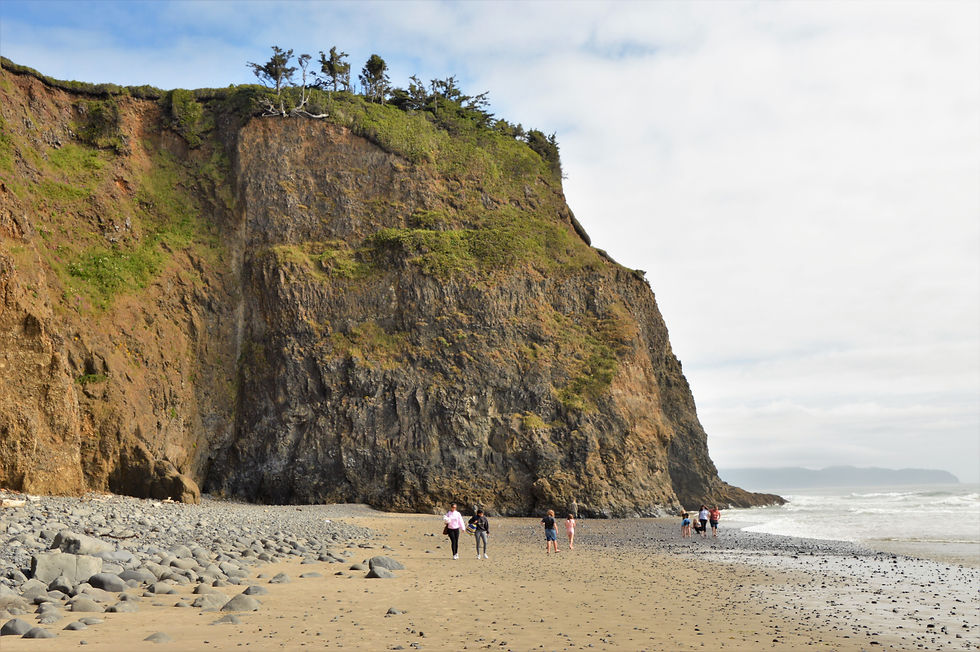
Every sea stack begins as part of a headland, a rocky extension of the coastline that projects into the ocean. As waves exploit cracks in the headland, they gradually carve sea caves, arches, and eventually isolate a sea stack.
The Pacific Ocean Does the Rest
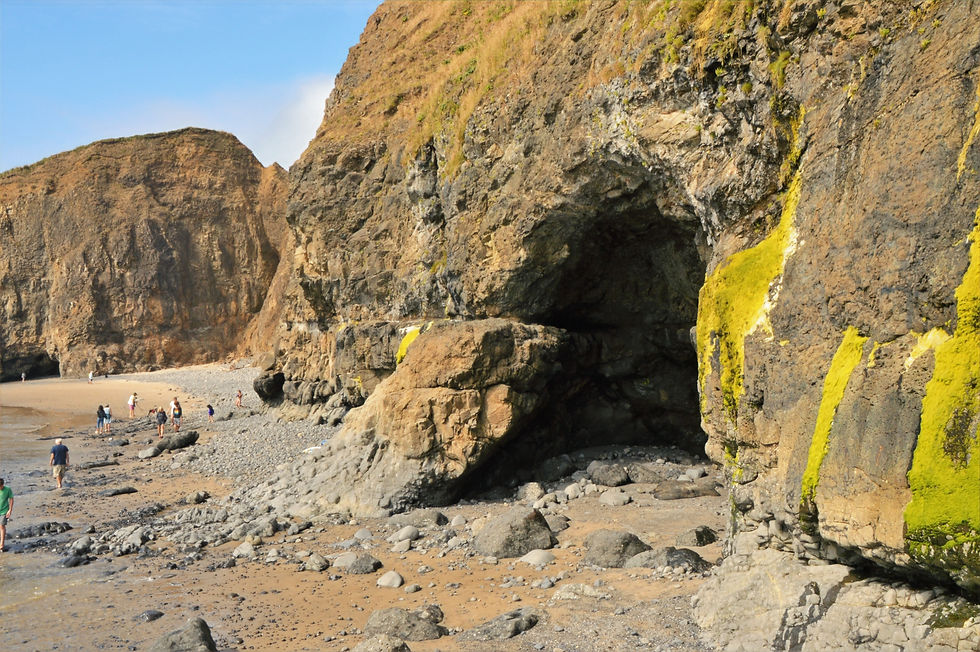
Every day, waves attack the shoreline. Natural fractures and joints within the rock provide weak points that the ocean relentlessly exploits. As each wave pounds the headland, these weaknesses slowly develop into shallow recesses that, over thousands and often millions of years, deepen into sea caves carved into the base of the cliffs, where wave energy is greatest.
Some sea caves continue to enlarge until they break through the headland, forming a sea arch. As erosion continues, the arch eventually becomes unstable, and its roof collapses, leaving behind an isolated sea stack. Although this transformation unfolds over immense spans of time, the sequence is surprisingly straightforward and can be visualized step by step.
Look for This
If you spot a sea cave, you're looking at a headland in transition. Continued wave erosion may eventually enlarge the cave into a sea arch and, with enough time, leave behind an isolated sea stack.
From Headland to Arch to Sea Stack
One of the easiest ways to understand sea stack formation is to imagine the coastline gradually changing.
Headland – A solid section of durable volcanic rock extends into the ocean.
Cracks Form – Waves exploit natural fractures and joints.
Sea Cave – Continued erosion enlarges the cracks into caves.
Sea Arch – The cave eventually breaks through the opposite side.
Sea Stack – When the arch roof collapses, the isolated pillar remains.
Sea Stump – Given enough time, even the sea stack is worn down until only a low rock remains above the waves.
Every stage of this process can be found somewhere along the coastline.

Why Do Some Sea Stacks Survive?
Many Oregon sea stacks are composed of hard volcanic basalt, a rock that withstands wave erosion far better than softer surrounding material. Others owe their survival to having fewer fractures or to a composition that resists erosion more effectively than that of neighboring cliffs.
Although these resilient pillars have endured for thousands of years, they are not permanent. Given enough time, even the toughest sea stacks will eventually succumb to the same forces that created them.

The Final Chapter: Sea Stumps
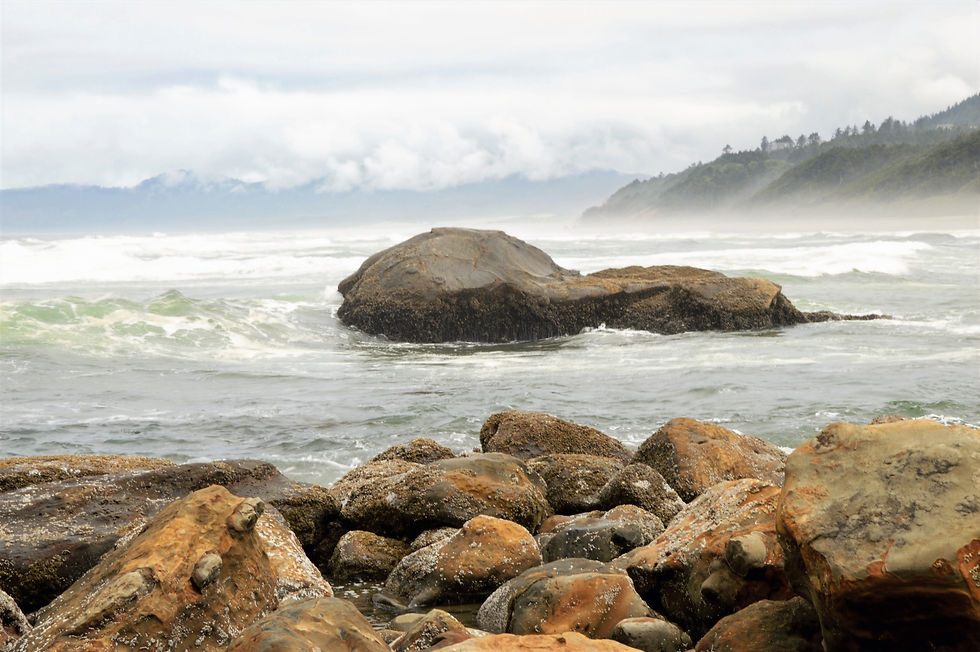
Eventually, every sea stack loses its battle against the Pacific. Sections collapse into the surf until only a low rocky remnant remains. Known as a sea stump, this final stage is often visible only at low tide, when the receding water reveals the last trace of what was once a towering sea stack. It marks the end of a geologic process that began millions of years earlier with a solid coastal headland.
Oregon's Coast Is Still Changing
One of the fascinating aspects of Oregon's coastline is that these processes are still occurring today.
Winter storms continue to pound cliffs.
Wave energy slowly enlarges fractures.
Small rockfalls occur every year.
Although the changes are usually too slow to notice during a single visit, the coastline you see today will look different thousands of years from now. New sea stacks may eventually form while existing ones slowly disappear beneath the waves.
Where Can You See Oregon's Best Sea Stacks?
While I've personally explored many of Oregon's coastal beaches and sea stacks, this guide also includes several iconic locations I haven't yet visited. These sites have been selected because of their exceptional scenic beauty, geologic significance, and importance to understanding the evolution of the Oregon Coast. Together, they represent some of the finest places to experience the state's remarkable shoreline.
Cannon Beach — Haystack Rock, one of Oregon's most iconic sea stacks.
Bandon — Numerous offshore sea stacks create one of the state's most dramatic coastal landscapes.
Pacific City — Haystack Rock rises offshore beside Cape Kiwanda.
Face Rock State Scenic Viewpoint — Sea stacks scattered across the shoreline.
Ecola State Park — Elevated viewpoints reveal how sea stacks align with rocky headlands.
How to Read an Oregon Beach
The next time you visit the coast, pause before walking onto the sand. Ask yourself:
Which rocks are still connected to the mainland?
Which ones stand alone?
Can you spot caves forming?
Do any cliffs show large fractures?
Which rocks appear most resistant to the waves?
These simple observations reveal the forces actively shaping the shoreline. Every winter storm removes sand from some beaches while depositing it on others. Cliffs slowly retreat, sea caves widen, arches eventually collapse, and occasional rockfalls remind us that the Pacific Ocean is continually carving the landscape. No two beaches tell the same story, but each preserves clues about the balance between rock strength, wave energy, and time.
Every Sea Stack Tells the Story of Time
Once you understand how sea stacks form, it's impossible to look at the Oregon Coast the same way again. Headlands, sea caves, arches, stacks, and stumps are no longer isolated landmarks; they become successive stages in an ongoing geologic process. Every sea stack marks a moment in a landscape shaped over millions of years and continues to evolve with every passing storm.
Explore More Coastal Geology
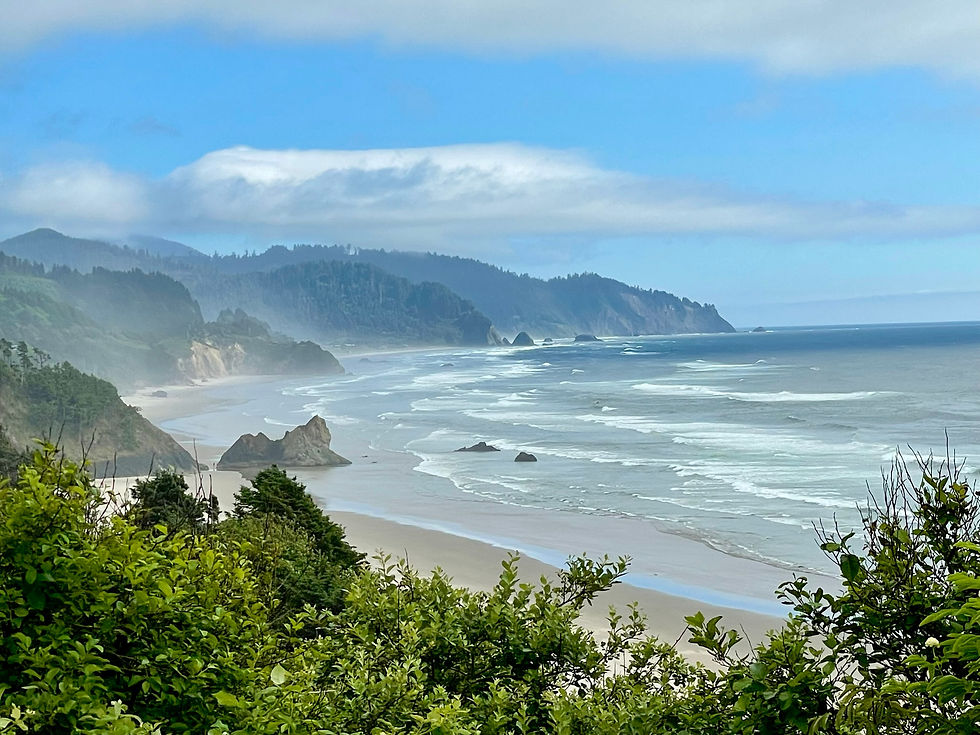
Now that you know how sea stacks form, it's time to see them with new eyes. From the iconic silhouette of Haystack Rock to the dramatic sea stacks of Arcadia Beach, every stretch of the coast reveals another chapter in this remarkable geologic story.
Discover Oregon's Most Spectacular Sea Stacks
The Best Beaches and Sea Stacks of the Oregon Coast — Discover the coast's most spectacular sea stacks and where to experience them.
Understanding Oregon's Coastal Headlands (In Development) — Learn how resistant headlands shape the coastline and provide the starting point for sea caves, arches, and sea stacks.
