California Desert Fan Palm Oases: Geology, Ecology, and the Best Hikes
Updated: Aug 5
California Desert Fan Palm Oases: Nature's Hidden Desert Sanctuaries
Towering groves of native fan palms rising from an otherwise barren desert seem almost impossible. Yet across Southern California, these remarkable oases have flourished for thousands of years, creating islands of life in one of North America's driest landscapes.
For hikers, photographers, and nature lovers, desert fan palm oases offer unforgettable experiences. Their cool shade, wildlife, and beauty stand in dramatic contrast to the surrounding desert, while their very existence tells the story of geology, groundwater, and survival.
Whether you're planning your first palm oasis hike or simply curious about how these unique landscapes formed, this guide explains what makes a desert fan palm oasis unique, how geologic forces create these hidden refuges, and why the native California fan palm is essential to their survival. You'll also discover some of California's finest oasis hikes, from the secluded canyons of the Mecca Hills to the remote wilderness of Joshua Tree National Park.
Entering Another World
What makes these remarkable landscapes so unforgettable isn't simply that they exist; it's the experience of discovering one.
One moment you're walking across a sun-baked wash lined with creosote bushes, cacti, and scattered boulders. A few minutes later, the temperature drops, birds begin calling overhead, and California fan palms close in around you. Entering a desert fan palm oasis feels less like reaching a destination than crossing into another world.
What Is a Desert Fan Palm Oasis?
A desert fan palm oasis is a naturally occurring grove of native California fan palms sustained by groundwater in an otherwise arid environment. While the surrounding landscape may appear dry and inhospitable, water hidden beneath the surface creates the conditions needed for palms and a surprising diversity of desert life to flourish.
Unlike tropical oases fed by rivers or abundant rainfall, California's desert fan palm oases depend on groundwater that reaches or lies close to the surface. This water may emerge from springs (Murray Canyon Palm Oasis), seep through fractured rock (Willis Palms Oasis), or remain just beneath sandy washes where shallow-rooted palms can access it year-round.
Stream-supported Murray Canyon Palm Oasis Seep-supported Willis Palms Oasis
No two oases are exactly alike. Some are hidden deep within rugged canyons, while others occupy broad desert washes or isolated valleys. Yet they all share one essential ingredient, water. Where dependable groundwater reaches the surface, California fan palms transform an otherwise harsh landscape into a cool, living refuge that supports an entire ecosystem. Understanding how groundwater rises to the surface reveals why these extraordinary landscapes exist in places where they seem least likely to survive.
How Do Desert Fan Palm Oases Form?
The secret to every desert fan palm oasis begins many miles away. Although Southern California's deserts receive little rainfall, the surrounding mountains capture far more precipitation during winter storms. Rain and melting snow soak into fractured bedrock and porous sediments, beginning a journey that may take years, or even centuries, as groundwater slowly moves beneath the desert.
This groundwater collects within underground aquifers hidden beneath layers of sand, gravel, and rock. Left undisturbed, much of it would continue flowing silently below the surface. But California's active geology changes everything.
Throughout the Coachella Valley and Mecca Hills, faults such as the San Andreas Fault have fractured, uplifted, and folded the Earth's crust. These structures act as both barriers and pathways for groundwater. Some rock layers force water upward, while fractures provide channels that allow it to reach the surface as springs, seeps, or areas of shallow groundwater.
Erosion also helps shape these landscapes. Over thousands of years, flash floods carve washes and canyons that expose groundwater or bring the water table close enough to the surface for the shallow roots of palms to reach it.
Together, mountain recharge, underground aquifers, fault-controlled groundwater, and erosion combine to create the rare conditions necessary for desert fan palm oases to exist.
If groundwater lies beneath much of Southern California's deserts, why aren't palm oases everywhere? Because these conditions rarely occur in the same place. Most groundwater remains too deep below the surface, many faults do not direct water upward, and countless washes never expose the water table. Only where geology, groundwater, climate, and time align can a desert fan palm oasis take root and survive.
Meet the Native California Desert Fan Palm
The defining plant of these remarkable landscapes is the California fan palm (Washingtonia filifera), the only palm species native to the western United States and one of the signature plants of the Sonoran Desert.
Unlike most desert plants, the California fan palm survives not because it is exceptionally drought-tolerant, but because its extensive root system taps into dependable groundwater hidden beneath the desert floor. For hikers, a grove of fan palms is often one of the clearest signs of the geology shaping the landscape beneath their feet.
Some oases contain only a handful of palms tucked within a narrow canyon, while others support hundreds of mature trees spread across broad desert valleys. Regardless of their size, each grove begins with the same hidden ingredient: reliable groundwater.
Growing up to 75 feet tall, California fan palms can live well over a century, with some individuals believed to be several hundred years old. Their trunks and broad, fan-shaped crowns create islands of shade that lower temperatures beneath the canopy, making the oasis noticeably cooler than the surrounding desert.
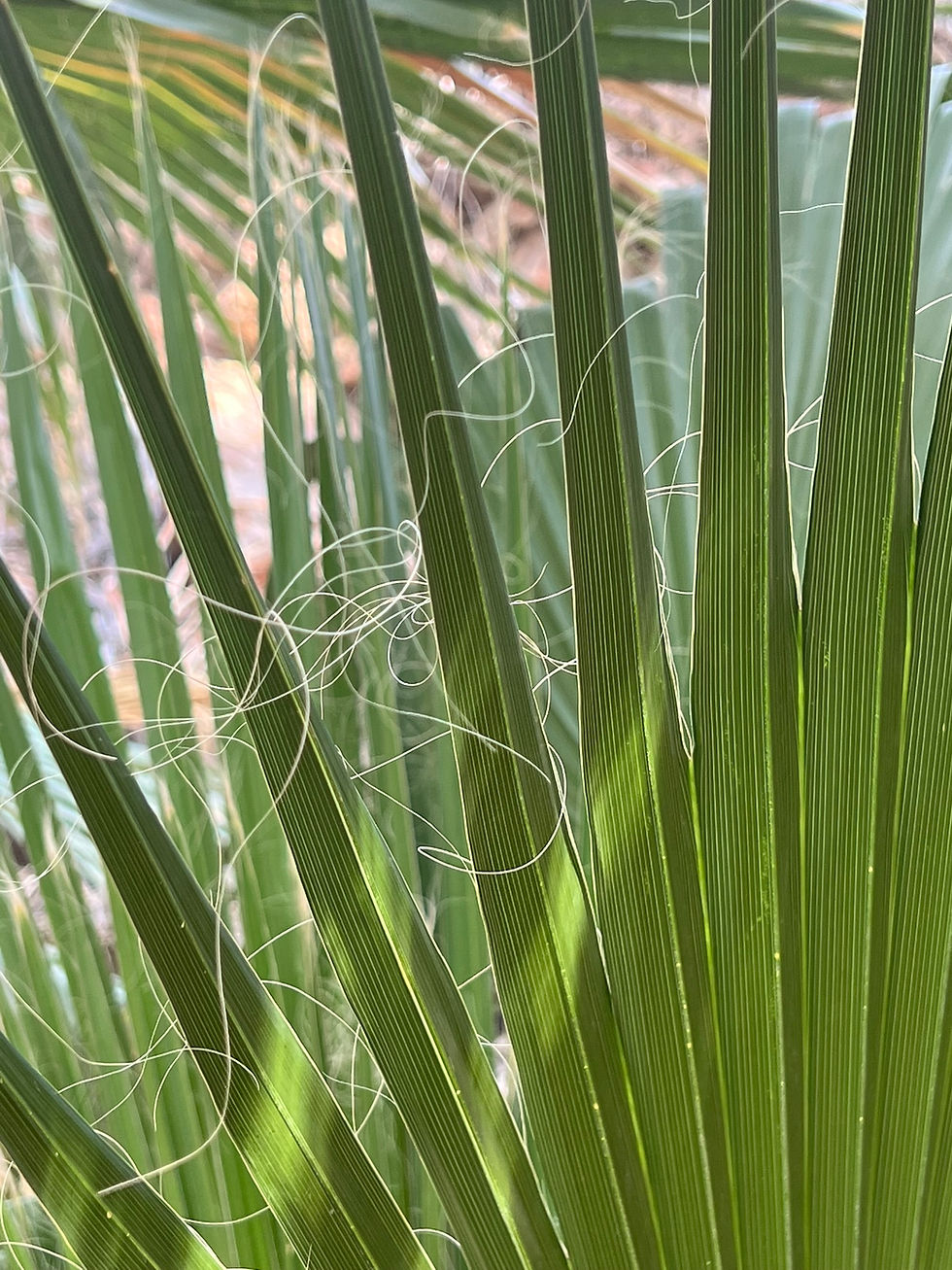
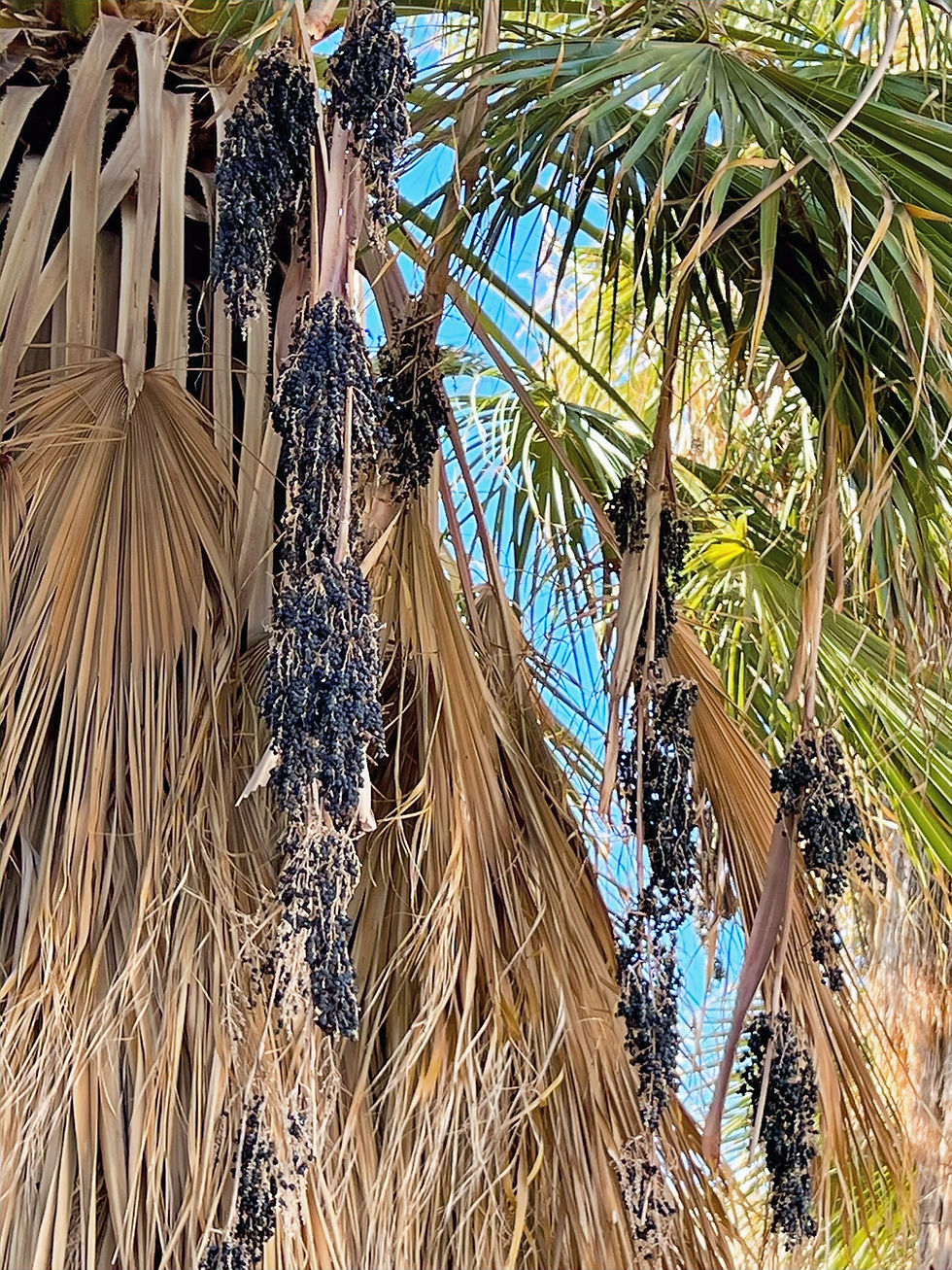
Unlike the ornamental palms commonly planted in cities, native California fan palms retain a distinctive "skirt" of dead fronds beneath their green canopy. While often mistaken for a sign of neglect, these hanging leaves are a natural part of the tree's life cycle.

In late spring and summer, the palms produce clusters of creamy white flowers that attract native pollinators before developing thousands of small, dark fruits. Birds, mammals, and seasonal floodwaters help disperse the seeds, allowing new palms to establish wherever groundwater reaches the surface.
If you visit an oasis when the fruit is ripe, and regulations allow, don't pass up the opportunity to taste one. I've sampled California fan palm berries on several hikes, and their surprisingly sweet, date-like flavor is one of the desert's little surprises. It's also a reminder that these remarkable trees have nourished wildlife and Indigenous peoples for thousands of years.
Life in a Desert Palm Oasis
Step from the open desert into a palm oasis, and the change is immediate. The shade of California fan palms creates a cooler, more humid environment where plants and wildlife flourish despite the surrounding desert.
The palms provide nesting sites for birds, shelter for bats, reptiles, and insects, while wildflowers and shrubs beneath the canopy support native pollinators and other small animals. Coyotes, desert bighorn sheep, and many other species visit oases for dependable water, shade, and food, even if they are rarely seen.

Together, the palms, understory vegetation, and reliable groundwater create a surprisingly complex food web. Though palm oases occupy only a tiny fraction of California's desert landscape, they support an exceptional concentration of biodiversity, making them some of the desert's most important natural refuges. Each oasis reflects a different combination of geology, groundwater, and landscape. Exploring several reveals just how varied California's native palm oases can be.
Where Are California's Best Desert Fan Palm Oases?
No two desert fan palm oases are exactly alike. Some fill narrow fault-carved canyons, while others spread across broad desert washes or secluded mountain valleys. The destinations below showcase some of California's finest native palm oases and the diverse landscapes they inhabit.
Compare California's Premier Desert Fan Palm Oases
Compare California's premier desert fan palm oases at a glance. Whether you're looking for the largest groves, the best geology, peaceful solitude, or the greatest adventure, this overview will help you choose the hike that's right for you.
Over the past several years, I've visited nearly every major native desert fan palm oasis in Southern California, documenting how geology, groundwater, and hiking experience differ from one oasis to another. Those firsthand observations form the basis for the comparisons below.
Oasis | Best For | Palm Grove | Solitude | Geology | Scenery | Adventure |
Willis Palms | 4th largest grove | ★★★★★ | ★★★☆☆ | ★★★★★ | ★★★★☆ | ★★★☆☆ |
Pushawalla Palms | Multiple groves | ★★★★★ | ★★★☆☆ | ★★★★★ | ★★★★★ | ★★★★☆ |
Hidden Palms | Quiet escape | ★★★☆☆ | ★★★★☆ | ★★★★☆ | ★★★★★ | ★★★☆☆ |
Vargas Palms | Remote adventure | ★★★☆☆ | ★★★★★ | ★★★★★ | ★★★★★ | ★★★★★ |
Lost Palms | Wilderness experience | ★★★★☆ | ★★★★★ | ★★★★☆ | ★★★★★ | ★★☆☆☆ |
Eagle Canyon Jane Hoffbrau Oasis | Short oasis hike | ★★★☆☆ | ★★★★☆ | ★★★★★ | ★★★★★ | ★★★★☆ |
Murray Canyon | Flowing stream | ★★★★☆ | ★★★★☆ | ★★★★☆ | ★★★★★ | ★★★★☆ |
Oswit Canyon | Hidden waterfall | ★★★★☆ | ★★★★☆ | ★★★★☆ | ★★★★★ | ★★★★☆ |
Fern Canyon | Ferns-lined seeps | ★★★★☆ | ★★★★☆ | ★★★★☆ | ★★★★★ | ★★★★☆ |
Bear Creek | Backcountry hike | ★★★☆☆ | ★★★★★ | ★★★★☆ | ★★★★★ | ★★★★★ |
Editor's Note: These assessments compare the unique strengths of each oasis and are intended to help you choose the experience that best matches your interests.
Looking for a quick recommendation? See our roundup of the Best Desert Fan Palm Oasis Hikes in Southern California for a concise overview of our favorite oasis adventures.
Explore California's Premier Desert Fan Palm Oases
Ready to explore? Learn more about each of California's premier desert fan palm oases below.
 | Willis Palms: California's largest native fan palm grove, shaped by fault-controlled groundwater | |||||||
 | Pushawalla Palms: Hike through multiple secluded palm groves while exploring one of the Coachella Valley's finest examples of a fault-controlled oasis. | |||||||
 | Hidden Palms: A peaceful canyon leading to a secluded grove where groundwater sustains a quiet oasis away from the crowds. | |||||||
 | Vargas Palms: A remote backcountry adventure to an isolated oasis shaped by geology and hidden groundwater. | |||||||
 | Lost Palms: Explore one of California's most iconic wilderness palm oases surrounded by rugged desert mountains. | |||||||
 | Murray Canyon: Follow a flowing creek through towering palms to one of the desert's most scenic stream-supported oases. | |||||||
 | Jane Hoffbrau Oasis & Eagle Canyon: A short hike to a secluded palm oasis nourished by groundwater beneath the foothills of Palm Springs. | |||||||
 | Oswit Canyon: Discover a lush palm oasis, perennial stream, and hidden waterfall just minutes from downtown Palm Springs. | |||||||
 | Fern Canyon: Wander through a rare stream-supported oasis where lush ferns and native palms thrive in a cool desert canyon. | |||||||
 | Bear Creek Oasis: A rugged canyon hike where a perennial stream, mountain-fed springs, and a secluded grove of California fan palms create one of Southern California's more distinctive desert oases. |
Other Hikes Featuring Desert Fan Palm Oases
Each of these hikes offers a different perspective on California's native desert fan palm oases, reminding us that even the smallest groves can transform an already memorable desert hike into something truly special.
Exploring the Art Smith Trail: Close Encounter with Bighorn Sheep: Close Encounter with Bighorn Sheep — A challenging hike featuring a few palm oases nestled near the turnaround points.
The Grotto Hike: A Hidden Chamber in the Mecca Hills — A hidden grotto and small palm oasis tucked within a rugged desert canyon
When to Visit Desert Fan Palm Oases
October–April: Ideal hiking weather with mild temperatures and comfortable trail conditions.
Spring: The best season for wildflowers, flowing seeps, and active wildlife.
Summer: Hikes are possible but should begin at sunrise to avoid dangerous midday heat.
After Storms: Check the forecast and avoid canyons during periods of flash flood risk.
Year-Round: Carry plenty of water, wear sun protection, and be prepared for rapidly changing desert conditions.
Conservation and Threats
Desert fan palm oases are among California's most resilient landscapes, having survived thousands of years of earthquakes, floods, droughts, and shifting climates. Yet they are also surprisingly fragile. Each oasis depends on a delicate relationship between geology, groundwater, and life. When that balance is disrupted, the entire ecosystem is affected.
The greatest long-term threat is the loss of groundwater. Extended drought, a warming climate, and increased groundwater withdrawals can lower water tables, reducing the amount of water available to sustain native palms and the countless plants and animals that depend on these rare desert refuges.
Wildfire is another growing concern. Although mature California fan palms often survive fire, intense burns can kill young palms, destroy understory vegetation, and alter habitat for birds, mammals, reptiles, and insects. Recovery is possible, but rebuilding a healthy oasis ecosystem may take decades.

Invasive species present another challenge. Tamarisk, in particular, competes aggressively for scarce water while crowding out native vegetation. As native plants disappear, the diversity of wildlife that depends on these oases also declines.
Every visit offers an opportunity to help protect these extraordinary places. Stay on established trails, avoid disturbing young palms and fragile vegetation, and practice Leave No Trace principles. Small actions help preserve the delicate balance that has allowed these remarkable ecosystems to endure for thousands of years.
More than beautiful desert destinations, fan palm oases are living reminders that geology, groundwater, and life are inseparably connected. Protecting them means safeguarding not only the palms themselves, but the hidden groundwater systems that make these rare ecosystems possible.
How You Can Help Protect Desert Fan Palm Oases
Desert fan palm oases have survived for thousands of years because of the remarkable relationship between geology, groundwater, and the resilience of the California fan palm. While these ecosystems are well adapted to the challenges of the desert, they remain vulnerable to human disturbance. Every visitor can help preserve these extraordinary landscapes by following a few simple practices:
Stay on designated trails to protect fragile soils, native vegetation, and young palm seedlings.
Leave palm skirts and fallen fronds undisturbed. They provide important habitat for birds, bats, insects, and other wildlife.
Pack out everything you bring in, including food scraps and litter.
Observe wildlife from a distance and never feed wild animals.
Respect seasonal closures and posted regulations designed to protect sensitive habitat.
Leave rocks, plants, and natural features where you find them so others can enjoy the oasis in its natural state.
Help prevent wildfires by following fire restrictions and never leaving burning materials behind.
Share your appreciation. Encouraging responsible recreation helps ensure these remarkable desert ecosystems remain healthy for generations to come.
The next time you step beneath the shade of a California fan palm, remember that you're standing in one of the desert's rarest ecosystems. Every oasis tells a story written by faults, groundwater, and time. By exploring responsibly, you help ensure that story continues for generations to come.
Ready to Experience California's Desert Fan Palm Oases?
Now that you know the remarkable story behind these rare desert ecosystems, it's time to experience them for yourself. From hidden canyon groves with just a handful of towering palms to expansive oases supporting hundreds of trees, Southern California offers unforgettable hikes for every skill level.
Explore our guide to the Best Desert Fan Palm Oasis Hikes in Southern California to discover the most spectacular palm oases, learn what makes each one unique, and find the hike that's right for your next adventure.

